
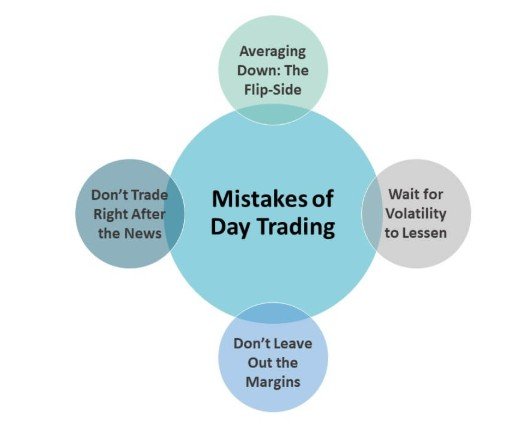
Every trader makes mistakes, but successful traders learn from them while unsuccessful traders repeat them endlessly. Furthermore, most trading mistakes aren’t about lack of knowledge—they’re about discipline, psychology, and poor habits that destroy accounts systematically.
Trading Without a Plan
The most fundamental mistake is trading without a written trading plan. Without predefined rules, you’re gambling based on emotions and impulses rather than executing a tested strategy. Consequently, every trade becomes a new decision requiring mental energy and emotional judgment, which exhausts you and leads to inconsistent results.
A proper trading plan documents your entire approach including entry criteria, exit rules, position sizing, and maximum daily loss limits. Additionally, the plan should specify exactly what setups you trade and which market conditions you avoid. Review your plan before every trading session to reinforce commitment when emotions later push you to deviate.
The solution is creating a detailed trading plan before risking money. Document your strategy, entry rules, exit rules, position sizing, and risk management. Then follow it religiously regardless of emotions. The plan becomes your anchor during emotional storms that inevitably arise during trading.
Risking Too Much Per Trade
Risking excessive amounts per trade is the fastest way to blow up accounts. New traders often risk 5-10% per trade hoping to get rich quickly. However, a few consecutive losses devastate their accounts before they learn discipline. Professional traders risk 1-2% maximum per trade, which seems painfully small to beginners but keeps professionals in business for decades.
The psychological damage of large losses is worse than the financial damage. After losing 30% of your account, fear paralyzes you even when valid setups appear. You can’t trade effectively while terrified. Calculate your position size based on stop distance and risk percentage before every trade to maintain consistent risk exposure.
Survival comes first, profits second. The 1-2% rule protects your capital through inevitable losing streaks that destroy undisciplined traders. Moreover, smaller position sizes allow you to think clearly because no single trade can significantly damage your account. This emotional freedom dramatically improves decision-making quality.
Letting Losses Run and Cutting Winners Short
The classic mistake involves holding losing positions hoping they’ll recover while taking profits too early on winners. This behavior guarantees long-term failure because your average loss exceeds your average win. Markets don’t care about your entry price or what you “need” to break even—they move based on supply and demand dynamics independent of your position.
Set stop losses before entering every trade and honor them without exception. Your stop loss represents the price level where your trade idea is proven wrong. Moving stops further away or removing them entirely transforms calculated risk into catastrophic losses. Additionally, use trailing stops on winning positions to lock in profits while allowing trends to fully develop.
The risk-reward ratio determines long-term profitability more than win rate. With consistent 1% risk and 2:1 reward-risk ratios, you need only 35% winners to break even. Therefore, focus on finding high-quality setups with favorable risk-reward rather than trying to increase win rates through perfect entries.
Overtrading
Overtrading destroys accounts through excessive transaction costs and emotional fatigue. Beginners often feel they must trade constantly to make money, but this leads to taking marginal setups that don’t meet their criteria. Quality matters infinitely more than quantity in trading—one excellent trade per week beats twenty mediocre trades.
The dopamine rush from executing trades becomes addictive, causing traders to create reasons to enter positions even when clear setups don’t exist. Boredom feels uncomfortable, so they manufacture trading opportunities that don’t actually align with their strategy. Recognize that doing nothing is often the most profitable decision when market conditions don’t favor your approach.
Limit yourself to a specific number of trades per day or week to combat overtrading tendencies. Additionally, walk away from your computer after reaching your daily profit target or loss limit. The best traders spend most of their time waiting for ideal setups rather than constantly clicking buttons.
Trading Based on Emotions
Emotional trading manifests as revenge trading after losses, overconfidence after wins, and fear-based exits during normal volatility. Fear and greed override logical decision-making, causing traders to abandon their proven strategies at precisely the wrong moments. After three consecutive losses, fear might prevent you from taking the fourth trade despite it being your best setup of the week.
The solution involves recognizing that losing is an inherent part of trading that cannot be avoided. Even professional traders lose 40-50% of the time. Accept losses as business expenses rather than personal failures. When you separate ego from results, emotional reactions decrease dramatically.
Keep a trading journal documenting your emotional state for every trade. Note whether you felt confident, fearful, excited, or anxious when entering and exiting. Over time, patterns emerge showing which emotions correlate with your best and worst trades. This awareness helps you recognize dangerous emotional states before they damage your account.
Ignoring Risk Management
Many traders focus obsessively on finding winning trades while neglecting proper risk management that protects capital. They might have a sound strategy but implement it without stop losses, proper position sizing, or daily loss limits. This combination guarantees eventual account destruction regardless of strategy quality.
Risk management rules include using stop losses on every position, never risking more than 1-2% per trade, and setting maximum daily and weekly loss limits. When you hit your daily loss limit, stop trading immediately regardless of temptation. The market will be there tomorrow, but if you destroy your account, you’re finished.
Diversification provides another risk management layer by preventing overexposure to any single asset or sector. Avoid putting your entire account into correlated positions that all move together. If your three “different” trades are all technology stocks, you effectively have one concentrated bet on the tech sector.
Chasing Price
Chasing occurs when you enter trades after they’ve already moved significantly, driven by fear of missing out (FOMO). You see a stock rallying 5% and jump in at the top, only to watch it immediately reverse. This behavior stems from emotional reactions rather than systematic execution of your trading plan.
The antidote involves waiting for price to come to your predetermined entry levels rather than chasing current price. Use limit orders at specific technical levels where your strategy says to enter. If price never reaches your limit, you simply don’t take the trade. Missing opportunities feels frustrating but prevents the larger mistake of entering at terrible risk-reward levels.
Moreover, recognize that opportunities constantly emerge in markets. Missing one setup means nothing because another will appear within days or hours. Professional traders let countless opportunities pass because they don’t meet their specific criteria. This patience separates winners from losers.
Not Using Stop Losses
Trading without stop losses exposes you to unlimited risk on every position. Some traders believe they can “watch the position” and manually exit if it goes against them. However, when losses mount, psychology prevents logical exits. You hold hoping for recovery, turning small losses into account-destroying disasters.
Set your stop loss before entering every trade based on technical levels or volatility measures. The stop represents the price where your trade hypothesis is invalidated. If price reaches your stop, your analysis was wrong and you should exit immediately. Never move a stop further away to give a losing trade “more room.”
Use technical levels like recent swing lows for long positions or swing highs for shorts when placing stops. Alternatively, calculate stops using Average True Range (ATR) to account for current market volatility. ATR-based stops automatically adjust to market conditions, providing appropriate distance without arbitrary fixed-point measurements.
Following the Crowd
Beginners often join trading groups or follow popular traders on social media, then blindly copy their trades without independent analysis. This herd mentality leads to buying tops and selling bottoms because by the time information reaches social media, smart money has already positioned themselves. Additionally, copying trades doesn’t teach you the skills needed for long-term independence.
Develop your own analytical framework rather than relying on others’ opinions. Study support and resistance levels, candlestick patterns, and market structure yourself. When you understand why trades work, you can replicate success systematically rather than depending on someone else’s signals.
If you do follow experienced traders, study their methodology rather than blindly copying positions. Understand their reasoning, risk management, and market context. This educational approach builds your skills while protecting you from following trades that don’t suit your account size or risk tolerance.
Trading Too Many Markets
Spreading attention across dozens of markets prevents developing deep expertise in any single instrument. Each market has unique characteristics, participants, and behaviors that take months to internalize. Day traders jumping between stocks, forex, crypto, and commodities never develop the pattern recognition that comes from focused specialization.
Choose one or two markets to master completely before expanding. Study their typical volatility patterns, how they react to news, and what technical setups work most reliably. This specialization allows you to recognize subtle nuances that generalists miss. Professional traders often focus exclusively on a handful of instruments throughout their entire careers.
Moving averages and technical indicators behave differently across various timeframes and instruments. What works perfectly on daily stock charts might fail miserably on 5-minute forex charts. Focus your learning on one market structure until you achieve consistent profitability before diversifying.
Lack of Preparation
Many traders open their computers at market open and randomly look for trades without any preparation. Professional traders spend hours before each session identifying key levels, reviewing overnight news, and marking potential setups. This preparation dramatically improves execution quality when opportunities arise.
Create a pre-market routine covering economic calendar events, overnight developments, and technical levels to watch. Mark important support and resistance zones where you anticipate trading opportunities. This preparation transforms reactive gambling into proactive strategic execution.
Review your watchlist before market open to identify which instruments show the best setup potential. Check for earnings announcements, economic data releases, or other catalysts that might create volatility. Additionally, plan your maximum risk for the day and calculate position sizes in advance rather than making these critical decisions under pressure.
Revenge Trading
Revenge trading occurs after losses when you immediately jump into new trades trying to recover money quickly. This emotionally-driven behavior typically compounds losses because you’re trading from frustration rather than following your system. The urgency to “get back to even” prevents objective analysis and proper risk assessment.
After taking a loss, step away from your computer for at least 15-30 minutes. Go for a walk, do push-ups, or review your trading plan. This break interrupts the emotional spiral and allows rational thinking to return. Moreover, remember that your broker doesn’t care about your P&L for the day—forcing trades to reach arbitrary profit targets serves no purpose.
Accept that losing days happen to everyone. Professional traders often have 2-3 losing days per week but remain profitable long-term through disciplined risk management. One bad day means nothing within a sample of hundreds of trades. Focus on process quality rather than daily results to avoid the revenge trading trap.
Not Adapting to Market Conditions
Markets cycle through trending, ranging, and volatile periods that favor different strategies. Traders who only know one approach suffer when market conditions change. A breakout strategy that works perfectly during strong trends generates constant losses during choppy consolidations. Recognizing current market conditions and adapting appropriately separates consistent winners from those who mysteriously “stop working.”
Learn to identify market regime changes by observing price structure and volatility characteristics. When markets transition from trending to ranging, adjust your strategy or reduce position sizes until clarity returns. Additionally, some traders simply stop trading during unfavorable conditions rather than forcing trades in unsuitable environments.
Back-test your strategy across different market periods to understand when it works best and when it struggles. This knowledge prevents the frustration of trading your best setups during conditions that don’t favor your approach. Knowing when NOT to trade is as valuable as knowing when to enter.
Practical Steps to Avoid These Mistakes
Start by identifying which mistakes you currently make most frequently. Keep a detailed trading journal documenting every decision and reviewing weekly for patterns. Most traders repeat the same 2-3 mistakes that account for 80% of their losses. Once identified, create specific rules preventing those behaviors.
Implement a checklist system requiring you to verify specific criteria before entering any trade. Your checklist should include confirmation that you have a stop loss set, position size calculated, and the setup matches your plan. This systematic approach prevents impulsive decisions that bypass your risk management rules.
Consider paper trading new strategies or trading during unfamiliar market conditions before risking real capital. Simulation allows you to test approaches and build confidence without financial consequences. Additionally, use small position sizes when transitioning from simulation to live trading to adjust psychologically.
Understanding common trading mistakes and implementing systems to avoid them dramatically accelerates your path to consistent profitability. Success in trading isn’t about never making mistakes—it’s about recognizing them quickly, learning from them, and ensuring you never make the same mistake twice.

Leave a Reply