
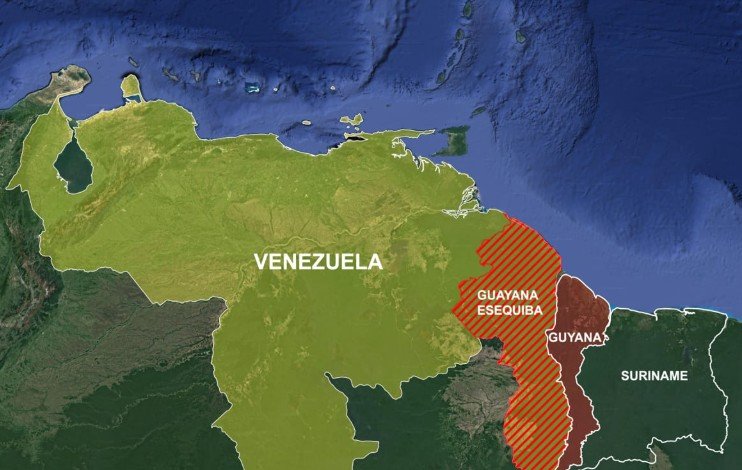
The largest U.S. military buildup in the Caribbean in decades is now parked off Venezuela’s coast, and traders are beginning to price in scenarios that sounded unthinkable just months ago—exactly the kind of geopolitical volatility that spikes the VIX. With roughly 15,000 American personnel, the USS Gerald R. Ford carrier strike group, F-35 stealth fighters in Puerto Rico, and President Trump’s explicit order to blockade sanctioned Venezuelan oil tankers, the geopolitical risk premium is creeping back into crude. If tensions escalate into actual military strikes or a sustained blockade that cuts Venezuela’s ~630,000 barrels per day of exports, WTI could surge from today’s mid-$50s toward $80 or higher in a matter of weeks.
What Makes Venezuelan Oil Unique—and Why It Matters
Venezuela produces about 900,000 barrels per day of crude and condensate, representing roughly 1% of global supply—a figure that might sound too small to move markets. But the devil is in the details: over 70% of that output is extra-heavy sour crude, virtually identical to Canadian oil sands bitumen and among the heaviest grades traded globally. This means Venezuelan barrels aren’t interchangeable with light sweet crude from the Permian or the North Sea; they feed specific refinery configurations optimized for heavy feedstocks, particularly in China, India, and the U.S. Gulf Coast.
When you remove a few hundred thousand barrels per day of heavy crude from the market, refiners can’t simply replace it one-for-one with lighter grades—they have to bid up prices for Canadian heavy, Mexican Maya, or Middle Eastern sour crudes to keep their cokers and hydrocrackers running. That tightening in the heavy oil market cascades into benchmark pricing: the sour Dubai benchmark typically rises relative to Brent, and the U.S. heavy crude premium over WTI expands as Gulf Coast refiners scramble for barrels.
The Military Standoff: How Close Are We to Actual Conflict?
Since late summer 2025, the Trump administration has systematically tightened the noose around Venezuelan President Nicolás Maduro’s regime, deploying what analysts describe as the most significant concentration of U.S. military power in the region since the Cold War. The centerpiece is the USS Gerald R. Ford, America’s newest and most advanced supercarrier, accompanied by guided-missile destroyers, cruisers, an amphibious ready group carrying over 4,500 Marines, and at least 10 F-35 Lightning II fighters now based in Puerto Rico.
On the ground—or rather, at sea—U.S. forces have already taken lethal action, sinking suspected narco-trafficking vessels in a series of strikes that have killed over 100 people since September. Trump’s December order to blockade Venezuelan oil tankers carrying sanctioned crude escalated the crisis further, with the Venezuelan Navy now escorting tankers out of port in direct defiance of U.S. threats. Defense analysts assess that if Washington decides to strike, the campaign would likely begin with air attacks on Venezuela’s air defenses, command nodes, and key infrastructure—a “limited strike” scenario designed to pressure Maduro into stepping down without committing ground troops.
Venezuela, for its part, has announced the mobilization of over 4 million militia and reserve forces to complement its ~125,000-strong conventional military, though experts question both the accuracy of that figure and the combat readiness of these troops. The regime’s military is widely described as “in shambles,” plagued by corruption, lack of spare parts, and desertions. Still, even a weak military can create chaos in oil markets if production facilities, export terminals, or tanker routes come under fire—or if Maduro orders preemptive sabotage of his own oil infrastructure to deny it to an invading force.
How Venezuelan Disruption Translates to Oil Price Action
Current WTI futures are trading around $57 per barrel, down from mid-year highs as fears of oversupply and weak Chinese demand have dominated sentiment. But energy analysts are beginning to model what happens if Venezuelan exports drop sharply or disappear altogether.
In a limited strike and blockade scenario, where U.S. forces interdict tankers and target select infrastructure but avoid regime change, analysts project WTI could rally $10 to $20 per barrel above baseline levels—pushing crude into the $67 to $77 range within days of the first strikes. If the conflict expands into sustained airstrikes that damage production facilities or export terminals, the move could extend to $80 or higher as the market prices in a protracted disruption.
The challenge for traders is that global fundamentals remain bearish outside of this geopolitical tail risk. The International Energy Agency and most private forecasters expect oversupply in 2026, with non-OPEC production growth outpacing demand and OPEC+ still holding back millions of barrels per day in spare capacity. That structural overhang explains why oil has struggled to sustain rallies this year, and why some analysts argue that even a complete loss of Venezuelan exports would be absorbed without pushing Brent or WTI sustainably above $75.
But tail risks don’t trade on averages—they trade on the fat tail of the distribution. If military action coincides with any other supply shock (a surprise OPEC cut, a pipeline outage in the Permian, renewed sanctions enforcement on Russian crude), or if China’s economy shows unexpected strength, the path to $80+ WTI becomes very real very fast.
What Chinese Buyers Are Doing—and Why It Matters
China is Venezuela’s largest oil customer, absorbing the majority of the country’s ~630,000 barrels per day of exports. Since the U.S. blockade order, Chinese refiners have demanded steep discounts on Venezuelan Merey crude to offset the soaring risk of cargo seizure, with some traders reporting that the discount to Brent has widened by several dollars per barrel in recent weeks. That’s a direct signal that the private market is pricing in elevated geopolitical risk—even before any shots are fired.
If Chinese refiners start turning away Venezuelan cargoes entirely or if insurers refuse to cover tankers headed to Venezuelan ports, the country’s oil exports could collapse within weeks regardless of whether the U.S. launches airstrikes. Venezuela’s state-run oil company, PDVSA, is already running into storage constraints as the blockade disrupts export schedules, and analysts warn the country may be forced to shut in production if tanks fill up. A sudden loss of 500,000 to 600,000 barrels per day from the market—especially heavy sour barrels—would force Asian and U.S. refiners to scramble for alternatives, bidding up prices for Canadian, Mexican, and Middle Eastern heavy grades.
How to Position for the Oil Spike Trade
If you’re trading this geopolitical setup, the first rule is to separate the macro thesis from the tactical execution. The macro thesis is straightforward: rising probability of Venezuelan supply disruption + structural tightness in heavy crude markets = upside skew in oil prices. The tactical challenge is that you’re fighting the bearish structural fundamentals and an oversupplied market that has punished bullish oil positions for months. Higher crude prices feed directly into inflation data, which could force the Federal Reserve to pause rate cuts in 2025 despite market expectations.
Here are the key ways to express the trade:
1. Outright long exposure via WTI or Brent futures (or ETFs like USO, UCO):
This is the simplest but riskiest approach. You’re taking directional exposure to crude, which means you’re vulnerable to the ongoing bearish macro if the Venezuela situation doesn’t escalate. If you go this route, size conservatively and use tight stops—perhaps a break below $54 on WTI as your risk-off signal. On the upside, $65 is the first technical resistance, then $70, then $80 if the geopolitical premium fully prices in.
2. Call options on crude (USO or /CL futures options):
Buying out-of-the-money calls (strike prices around $70 to $75 for WTI) gives you exposure to the upside spike without committing full capital to a futures position. The trade-off is time decay: if the military situation drags on without escalation, your options bleed theta. But if strikes happen, those calls could multiply in value as implied volatility and spot prices both surge.
3. Long energy equities with Venezuelan or heavy crude exposure:
Canadian oil producers (especially oil sands operators like Suncor, Canadian Natural Resources, Cenovus) are direct beneficiaries if Venezuelan heavy crude disappears and refiners bid up Canadian alternatives. U.S. Gulf Coast refiners with heavy crude processing capacity (Valero, Marathon Petroleum, Phillips 66) could also see margin expansion as they capture the premium on scarce heavy feedstocks. These are lower-volatility plays than outright crude futures but still give you geopolitical upside exposure.
4. Pairs trade: Long oil / short equities:
If you believe a Venezuela conflict would spike oil but hurt risk assets broadly (via inflation concerns, growth fears, or Fed hawkishness), you can pair long crude exposure with a short position in SPY, QQQ, or sector ETFs like XLY (consumer discretionary). This hedges your equity exposure while isolating the oil spike thesis.
5. Watch the heavy-sour crude spread:
Track the price differential between WTI (light sweet) and heavier sour benchmarks like Dubai or Canadian Western Select. If that spread tightens (heavy crude rising faster than light), it’s a real-time signal that refiners are bidding for scarce heavy barrels and the Venezuelan supply risk is being priced in. You can trade this via crack spreads or by going long heavy crude proxies and short WTI.
Key Levels and Catalysts to Watch
The next 2–4 weeks are critical. Here are the signposts that would confirm or invalidate the thesis:
- Escalation triggers: Any U.S. airstrikes on Venezuelan targets, additional tanker seizures, or a hot engagement between U.S. and Venezuelan naval forces would likely send WTI spiking $5 to $10 in the first session.
- De-escalation signals: If Trump or Maduro backs down, or if a negotiated settlement emerges (rumors of Maduro offering oil concessions to avoid strikes have circulated), oil would likely give back recent gains and retest the low-$50s.
- OPEC response: Watch whether OPEC+ comments on the situation or signals willingness to add barrels if Venezuelan supply is disrupted—this would cap upside.
- Chinese demand data: If China’s economy weakens further or refinery runs disappoint, that bearish fundamental could overwhelm the geopolitical bid.
- Storage and shut-ins: If Venezuela announces it’s shutting in production due to full storage tanks (as analysts warned), that’s a leading indicator that exports are already collapsing even without military action.
Risk Management: Don’t Fight the Trend Until It Breaks
The hardest part of trading geopolitical tail risk is that you’re buying what the market has been selling. WTI has been in a downtrend for months, and weak fundamentals remain the base case. If you position for the Venezuela spike and it doesn’t materialize, you’ll be holding a losing trade in a bearish tape.
That’s why position sizing and time horizon are everything here. If you’re swing trading this on a 2- to 4-week view, keep positions small enough that a full stop-out doesn’t damage your account. If you’re longer-term and believe geopolitical risk is structurally underpriced in energy, consider scaling in over multiple entries rather than going all-in at once.
And remember: wars are unpredictable, but markets are efficient at pricing uncertainty once it’s visible. The real edge in this trade isn’t predicting whether strikes happen—it’s positioning early while the market is still skeptical, then managing risk tightly as the headlines accelerate.

Leave a Reply