
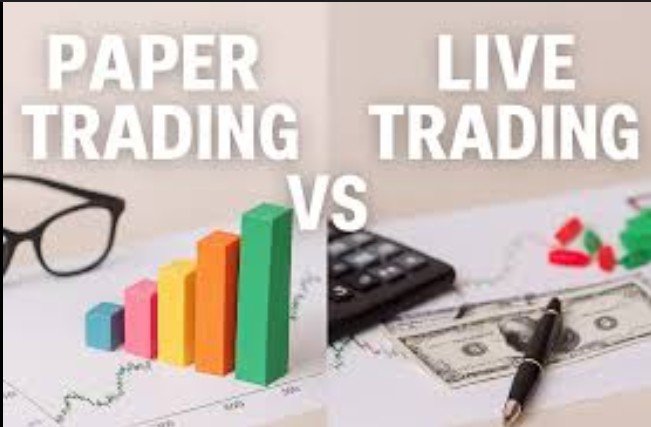
Paper trading uses simulated money to practice trading without financial risk, while real money trading involves actual capital where profits and losses affect your bank account. Furthermore, the transition from paper to real money is one of the most critical decisions new traders face, and making it too early or too late both create problems.
The Purpose of Paper Trading
Paper trading serves as your training ground for learning platform mechanics, testing strategies, and building consistency without risking capital. Think of it as flight simulation before piloting actual planes—essential preparation, but fundamentally different from the real experience. Additionally, you learn order types, platform navigation, and chart tools through paper trading without costly mistakes.
You can collect data on win rate, average win/loss ratio, and maximum drawdown during paper trading. These statistics tell you whether your approach has an edge before risking real capital. Moreover, paper trading lets you test strategy profitability over many trades to determine if your method actually works.
The psychological aspect is where paper trading shows both value and limitations. You practice following your trading plan and build the habit of systematic execution. However, without real money at stake, you cannot replicate the emotional intensity of actual trading.
What Paper Trading Cannot Teach You
The biggest limitation of paper trading is its inability to replicate emotional pressure. When nothing is at risk, you feel no fear or greed. Consequently, you take entries easily and hold through volatility without stress, but real money changes everything.
Most traders perform dramatically worse with real money than paper money. That 70% win rate in simulation might drop to 45% when actual dollars are involved because fear causes hesitation and premature exits. Additionally, paper trading doesn’t teach you how it feels to watch your account drop 10% or see a winning trade reverse into a loss.
Paper trading doesn’t accurately reflect trade execution realities. You get perfect fills at ideal prices with no slippage in simulation environments. Meanwhile, live trading introduces delays, spread volatility, and partial fills that impact profitability. Therefore, strategies that work flawlessly on paper sometimes struggle in real market conditions.
Commission and fee structures rarely appear accurately in paper trading platforms. These costs accumulate quickly in live trading, especially for active day traders making multiple trades daily. A strategy showing 2% average gains on paper might become break-even after commissions eat into profits.
Key Differences Between Paper and Real Money Trading
Emotional Impact
Paper trading eliminates psychological pressure entirely, while live trading introduces intense emotions that affect decision-making. Fear of losing real money causes traders to exit winning positions too early or avoid valid setups altogether. Conversely, greed drives traders to overtrade or risk too much chasing quick profits.
The emotional roller coaster of real trading tests your discipline in ways simulation never can. You might follow your plan perfectly on paper, then completely abandon it when real money creates stress. Therefore, understanding this emotional gap helps you prepare mentally for the transition.
Market Execution Differences
Orders in paper trading execute at expected prices with minimal delay or slippage. However, live markets introduce friction through bid-ask spreads, liquidity constraints, and order queue positions. During volatile periods, the difference between your expected fill and actual fill can significantly impact results.
Slippage occurs when your order fills at a different price than anticipated, typically during fast-moving markets or with large position sizes. Paper platforms rarely simulate this accurately, creating unrealistic expectations about entry and exit precision. Consequently, traders often experience shock when live execution differs from simulation.
Risk Management Reality
Trading on paper feels like playing poker with Monopoly money—you bet big, experiment freely, and take risks without hesitation. This freedom encourages creativity but builds dangerous habits if carried into live trading. In real trading, every trade has actual consequences that you feel immediately.
Blowing past your stop loss once with real money creates gut-wrenching feelings that teach respect for risk management. Similarly, risking too much on a single setup can damage your account in ways that take months to recover from. These lessons cannot be learned without real stakes involved.
Signs You’re Ready for Real Money Trading
You Understand the Platform
Platform fluency means you can confidently troubleshoot errors, work with historical data, and run analyses without hiccups. If you understand order types, can quickly place and modify orders, and know how to use all necessary trading tools, that indicates readiness. For most traders, this takes about 30 to 60 days of paper trading practice.
Additionally, you should understand how your broker’s specific platform handles different market conditions. Know the platform’s limitations, how it displays data, and where critical functions are located. This technical competency prevents costly mistakes when emotions run high during live trading.
Your Strategy Shows Consistent Results
Consistency matters more than occasional big wins when evaluating readiness. Track at least 50-100 paper trades to establish whether your approach has a genuine edge. Look for steady improvement or stability in your key metrics over time rather than dramatic swings.
Your win rate, average risk-reward ratio, and maximum drawdown should remain relatively stable across different market conditions. If your results vary wildly from week to week, you probably need more practice before risking real capital. Moreover, consistent execution of your trading rules demonstrates the discipline necessary for live markets.
You Have a Complete Trading Plan
A proper trading plan documents your entire approach including entry criteria, exit rules, position sizing, and maximum daily loss limits. Furthermore, the plan should specify exactly what setups you trade and which market conditions you avoid. Without this roadmap, emotions will dictate your decisions in live trading.
Your plan must include specific risk management rules that you’ve proven you can follow consistently. Define maximum risk per trade (typically 1-2% of account value) and daily stop-out levels. Additionally, document how you’ll handle winning and losing streaks to prevent emotional decision-making.
You’re Emotionally Prepared
Emotional preparedness is just as important as technical readiness. You may be ready to go live if you’ve honestly assessed your ability to handle gains and losses with real money. Consider whether you’ve experienced simulated large drawdowns in paper trading and learned to stay disciplined through them.
Understand that even sound strategies lose money short-term, and be mentally prepared for that reality. Live trading will test your psychology in ways paper trading cannot. Therefore, enter with realistic expectations about volatility, drawdowns, and the learning curve ahead.
When to Make the Transition
The Data on Transition Timing
Paper trading uses simulated money to practice trading without financial risk, while real money trading involves actual capital where profits and losses affect your bank account. Furthermore, the transition from paper to real money is one of the most critical decisions new traders face, and making it too early or too late both create problems.
The Purpose of Paper Trading
Paper trading serves as your training ground for learning platform mechanics, testing strategies, and building consistency without risking capital. Think of it as flight simulation before piloting actual planes—essential preparation, but fundamentally different from the real experience. Additionally, you learn order types, platform navigation, and chart tools through paper trading without costly mistakes.
You can collect data on win rate, average win/loss ratio, and maximum drawdown during paper trading. These statistics tell you whether your approach has an edge before risking real capital. Moreover, paper trading lets you test strategy profitability over many trades to determine if your method actually works.
The psychological aspect is where paper trading shows both value and limitations. You practice following your trading plan and build the habit of systematic execution. However, without real money at stake, you cannot replicate the emotional intensity of actual trading.
What Paper Trading Cannot Teach You
The biggest limitation of paper trading is its inability to replicate emotional pressure. When nothing is at risk, you feel no fear or greed. Consequently, you take entries easily and hold through volatility without stress, but real money changes everything.
Most traders perform dramatically worse with real money than paper money. That 70% win rate in simulation might drop to 45% when actual dollars are involved because fear causes hesitation and premature exits. Additionally, paper trading doesn’t teach you how it feels to watch your account drop 10% or see a winning trade reverse into a loss.
Paper trading doesn’t accurately reflect trade execution realities. You get perfect fills at ideal prices with no slippage in simulation environments. Meanwhile, live trading introduces delays, spread volatility, and partial fills that impact profitability. Therefore, strategies that work flawlessly on paper sometimes struggle in real market conditions.
Commission and fee structures rarely appear accurately in paper trading platforms. These costs accumulate quickly in live trading, especially for active day traders making multiple trades daily. A strategy showing 2% average gains on paper might become break-even after commissions eat into profits.
Key Differences Between Paper and Real Money Trading
Emotional Impact
Paper trading eliminates psychological pressure entirely, while live trading introduces intense emotions that affect decision-making. Fear of losing real money causes traders to exit winning positions too early or avoid valid setups altogether. Conversely, greed drives traders to overtrade or risk too much chasing quick profits.
The emotional roller coaster of real trading tests your discipline in ways simulation never can. You might follow your plan perfectly on paper, then completely abandon it when real money creates stress. Therefore, understanding this emotional gap helps you prepare mentally for the transition.
Market Execution Differences
Orders in paper trading execute at expected prices with minimal delay or slippage. However, live markets introduce friction through bid-ask spreads, liquidity constraints, and order queue positions. During volatile periods, the difference between your expected fill and actual fill can significantly impact results.
Slippage occurs when your order fills at a different price than anticipated, typically during fast-moving markets or with large position sizes. Paper platforms rarely simulate this accurately, creating unrealistic expectations about entry and exit precision. Consequently, traders often experience shock when live execution differs from simulation.
Risk Management Reality
Trading on paper feels like playing poker with Monopoly money—you bet big, experiment freely, and take risks without hesitation. This freedom encourages creativity but builds dangerous habits if carried into live trading. In real trading, every trade has actual consequences that you feel immediately.
Blowing past your stop loss once with real money creates gut-wrenching feelings that teach respect for risk management. Similarly, risking too much on a single setup can damage your account in ways that take months to recover from. These lessons cannot be learned without real stakes involved.
Signs You’re Ready for Real Money Trading
You Understand the Platform
Platform fluency means you can confidently troubleshoot errors, work with historical data, and run analyses without hiccups. If you understand order types, can quickly place and modify orders, and know how to use all necessary trading tools, that indicates readiness. For most traders, this takes about 30 to 60 days of paper trading practice.
Additionally, you should understand how your broker’s specific platform handles different market conditions. Know the platform’s limitations, how it displays data, and where critical functions are located. This technical competency prevents costly mistakes when emotions run high during live trading.
Your Strategy Shows Consistent Results
Consistency matters more than occasional big wins when evaluating readiness. Track at least 50-100 paper trades to establish whether your approach has a genuine edge. Look for steady improvement or stability in your key metrics over time rather than dramatic swings.
Your win rate, average risk-reward ratio, and maximum drawdown should remain relatively stable across different market conditions. If your results vary wildly from week to week, you probably need more practice before risking real capital. Moreover, consistent execution of your trading rules demonstrates the discipline necessary for live markets.
You Have a Complete Trading Plan
A proper trading plan documents your entire approach including entry criteria, exit rules, position sizing, and maximum daily loss limits. Furthermore, the plan should specify exactly what setups you trade and which market conditions you avoid. Without this roadmap, emotions will dictate your decisions in live trading.
Your plan must include specific risk management rules that you’ve proven you can follow consistently. Define maximum risk per trade (typically 1-2% of account value) and daily stop-out levels. Additionally, document how you’ll handle winning and losing streaks to prevent emotional decision-making.
You’re Emotionally Prepared
Emotional preparedness is just as important as technical readiness. You may be ready to go live if you’ve honestly assessed your ability to handle gains and losses with real money. Consider whether you’ve experienced simulated large drawdowns in paper trading and learned to stay disciplined through them.
Understand that even sound strategies lose money short-term, and be mentally prepared for that reality. Live trading will test your psychology in ways paper trading cannot. Therefore, enter with realistic expectations about volatility, drawdowns, and the learning curve ahead.
When to Make the Transition
The Data on Transition Timing
Recent data shows that 67.2% of algorithmic traders start directly with live trading rather than paper trading. Of those who do paper trade first, over half transition to live trading within 30 days and three-quarters make the switch in less than two months. This suggests that spending extensive time in paper environments isn’t always optimal.
The key is using paper trading to understand platform basics, then shifting to live trading to learn how strategies perform in real market conditions. If you find yourself at the third, sixth, or tenth month of paper trading, you may be over-preparing and delaying valuable real-world lessons. However, rushing in too quickly without basic competency causes expensive mistakes.
Starting Small with Real Money
Begin live trading with the minimum position size your broker allows, even if your account can support larger trades. Use micro contracts in futures or minimum share quantities in stocks to keep financial pressure low while you adjust psychologically. This approach lets you experience real money emotions without risking significant capital.
Trade small for at least 30-60 days while you adapt to live market execution and emotional responses. Monitor whether your paper trading results translate to live conditions. Many traders discover their approach needs adjustments once real slippage, spreads, and emotions enter the equation.
The Hybrid Approach
Continue using paper accounts to test new strategies while live trading your proven systems. This hybrid approach allows safe experimentation without risking capital on unproven ideas. Additionally, you can verify strategy modifications on paper before implementing them with real money.
Use paper trading as an ongoing tool for learning and testing rather than viewing it as a phase you complete and abandon. Professional traders often maintain demo accounts specifically for trying new approaches or trading instruments outside their expertise. This balanced method maximizes learning while protecting capital.
Common Transition Mistakes
Jumping in Too Quickly
Many traders transition to real money after just a few winning paper trades without establishing true consistency. A few lucky wins don’t prove your strategy works or that you can execute it properly under pressure. Take time to build genuine competence before risking real capital.
Similarly, moving to live trading without a complete trading plan leads to emotional decision-making during stress. Develop and test comprehensive rules on paper before implementing them with real money. The extra preparation time pays dividends by preventing costly mistakes.
Risking Too Much Initially
Starting with full position sizes immediately creates unnecessary psychological pressure that interferes with execution. Even though your account might support larger trades, use minimal sizes initially while adjusting to real money emotions. Scale up gradually as you prove you can maintain discipline with actual stakes.
Additionally, avoid the temptation to “earn back” paper trading “profits” by trading aggressively. Those simulated gains were

Leave a Reply